Use Cases
QR Codes for Real Estate Listings
A yard sign has about three seconds and forty characters to work with. Someone interested in the property isn't going to memorize a listing reference, and they're certainly not going to call an agent from the pavement to ask the asking price. A QR code turns that moment of curiosity into a listing on their phone. Which is the whole game, because that curiosity has a very short half-life.
The short version
- One code per property. It's the only way to know which sign generated the inquiry.
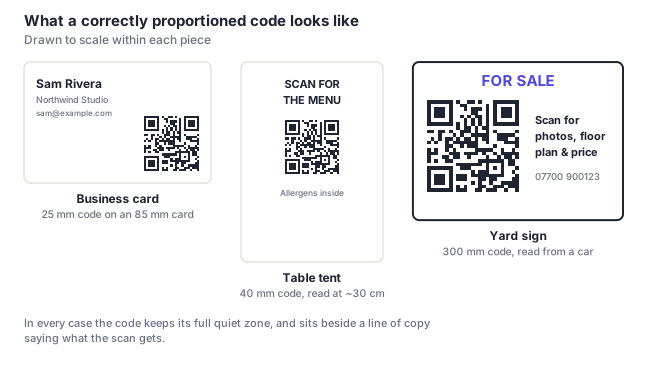
- 25–30 cm on a yard sign: sized for someone in a car or on the far side of a path.
- Lead with photos and price, not a lead-capture form.
- Never gate the listing behind a form. It kills the scan and the goodwill.
- Use a dynamic code: repoint it when the property sells, and reuse the sign.
- Weatherproof and matte. Signs live outdoors for months.
What to link to
The scan happens because someone wants to know two things immediately: what does it look like inside, and how much is it? Anything that delays those answers wastes the scan.
- Photos first, price visible without scrolling. If the price is a secret, expect the inquiry rate to reflect that.
- Floor plan. The second thing people look for, and often the thing that decides whether they book a viewing.
- Video or virtual tour if you have one. This is the moment it's worth the most, someone is standing outside the actual building.
- A one-tap way to book a viewing or call. Not a contact form that asks for a postal address.
- Key facts: bedrooms, tenure, council tax band, EPC. The things people otherwise phone to ask.
Requiring an email address before showing photos is the most common way agents ruin this. Someone standing on a pavement with a phone will simply leave, and you've converted a warm prospect into a bad impression. Show the property; ask for details when they want to book something. The scan already told you they were interested.
Whether to link to your own site or a portal listing depends on which is better on a phone. Your own page is preferable if it's good, it keeps the inquiry with you rather than the portal, but a well-built portal listing beats a bad agency page every time.
Sizing for a yard sign
This is the use case most often undersized, because the code is designed on a screen where it looks enormous and then read from the far side of a front garden or from a slowing car.
| Placement | Read from | Code size |
|---|---|---|
| Yard / For Sale board | 2–3 m | 25–30 cm |
| Window card in the branch | 60 cm | 6–8 cm |
| Printed listing flyer | 40 cm | 4–5 cm |
| Brochure back page | 40 cm | 4–5 cm |
| Open-house A-board | 2 m | 20–25 cm |
| Business card / agent card | 20 cm | 2–2.5 cm |
Physical details that matter for boards specifically:
- Matte, always. A gloss board in direct sun reflects the sky into the camera, and the code disappears entirely at the angle someone naturally holds a phone.
- Black on white. Agency brand colors belong elsewhere on the board. A code has to survive rain, low winter light and dusk.
- Mount it at eye level, not at the top of the post. People don't reach up with a phone, and a code above head height on a board is decoration.
- Keep it clear of the frame and any grommets. A fixing through a finder pattern kills the code.
- Expect it to be scanned from a car. Which means bigger, higher contrast, and not tucked into a corner.
One code per property
This is the part most agencies skip, and it's where the real value is.
A single agency-wide code pointing at your listings page tells you nothing. A distinct dynamic code per property tells you how many people stopped outside each house. Which is information no agency historically had, and which is directly useful in three ways:
- Vendor reporting. "Your board was scanned 47 times last week" is a concrete thing to say in a Friday call, and it's far more persuasive than "there's been some interest."
- Pricing conversations. High scans and no viewings is a specific, evidence-backed signal, people are looking and the price is stopping them. That's a much easier conversation to open than a general suggestion to reduce.
- Board placement. Scan counts show which streets and positions actually generate attention.
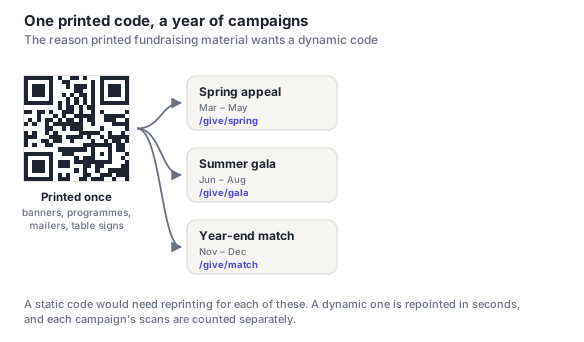
That reuse is worth planning for. When a property sells, the board comes back. And if its code is dynamic, it can be repointed at the next listing rather than reprinted. Some agencies repoint sold properties' codes to a "sold in this street, what's yours worth?" page, which turns leftover signage into a valuation lead source.
The copy on the board
"Scan me" wastes the one chance to explain the trade. Be concrete about what's on the other side:
- "Scan for photos, floor plan & price": names all three things people want.
- "Scan for the virtual tour" if you have one; it's a stronger draw than photos.
- Keep the phone number printed as well. Plenty of people, particularly older buyers, will call rather than scan.
Keep the text outside the code's quiet zone, four blank modules on every side. On a board this is easy to get wrong, because designers reasonably want to tuck copy in close.
Beyond the board: where else a code earns its place
The yard sign gets the attention, but it is the use with the weakest intent. A passer-by who may not be in the market at all. The higher-value placements are the ones where someone has already chosen to be there.
Open houses: the strongest case
An open house is the only moment where you have a room full of people who have deliberately turned up, and the traditional capture method is a clipboard. A code on the kitchen island going to a short registration form is faster for them and cleaner for you: no illegible handwriting, no transcription, and the inquiry lands in whatever system you already use rather than in a notebook.
Two things make the difference between this working and not:
- Offer something for the scan. "Sign in" is a request; "scan for the floor plan and the full photo set" is a trade. People complete the second one.
- Use a separate code from the yard sign's. Same property, different placement. And because they are different codes, the scan counts tell you how many people came in off the street versus how many were already coming. That distinction is otherwise invisible.
Brochures and window cards
The sizing maths is completely different here and it catches people out. A yard sign is read from several meters away and needs a large code; a brochure is held at arm's length, so roughly 2 cm square is plenty. The failure mode flips too, brochures are printed on coated stock in volume, where ink spread on a dense code matters far more than distance does.
A window card in an office display is the awkward middle case: read from perhaps a meter, through glass, often with reflections. Size it for the distance and test it through the actual window, since glare is a real failure cause and an entirely predictable one.
Virtual tours and video walkthroughs
If you have a tour, it is almost always the strongest thing to point at. It is the closest a passer-by can get to being inside without an appointment, and it is the one asset a static photo board cannot reproduce. It also self-selects: someone who watches a walkthrough is a materially warmer lead than someone who glanced at a price.
Staging
A quieter one, borrowed from show homes: small codes on staged furnishings and fixtures linking to spec or purchase information. It answers the question buyers actually ask at viewings ("where is that from?"), and for a developer selling multiple units it doubles as a supplier referral channel.
Property management is a different job
Everything above is about selling a property. QR codes are arguably more useful after the sale: building directories and wayfinding, maintenance and work-order tickets, access instructions, amenity booking. That is a different reader with different problems, so it has its own page: QR codes for property management.
Frequently asked questions
How big should a QR code be on a real estate sign?
25–30 cm on a yard or For Sale board, sized for someone reading it from 2–3 m. The far side of a front garden, or a slowing car. That's substantially larger than most agency boards use, and undersizing is the most common failure here because the code looks enormous on a designer's screen. Mount it at eye level rather than the top of the post, and use matte black on white so it survives direct sun and dusk.
What should a real estate QR code link to?
The property's own listing page, with photos and the price visible without scrolling, plus the floor plan and a one-tap way to book a viewing. Someone scanning is standing outside the building wanting to know what it looks like inside and what it costs, anything that delays those two answers wastes the scan. Never put a lead-capture form in front of the listing; a person on a pavement will simply leave.
Should each property have its own QR code?
Yes, and it's the highest-value part of doing this properly. A per-property dynamic code tells you how many people stopped outside each house, which supports vendor reporting ("your board was scanned 47 times this week"), makes pricing conversations evidence-based when scans are high but viewings aren't, and shows which board positions actually work. A single agency-wide code tells you none of that.
What happens to the QR code when the property sells?
With a dynamic code, repoint it. Either to the next property that board is used for, or to a "recently sold in this street, what's yours worth?" valuation page, which turns returned signage into a lead source. With a static code, the board is either reprinted or becomes a link to a dead listing, which is a poor advertisement for the agency that put it there.
Do QR codes on for-sale boards actually get used?
They do when they're big enough to scan from where people stand and when the copy says what's behind them. The two reasons they don't: the code is sized for a flyer rather than a board, and it says "scan me" instead of naming the photos, floor plan and price. A dynamic code answers the question directly for your own boards, since you'll see the actual scan counts within a week.